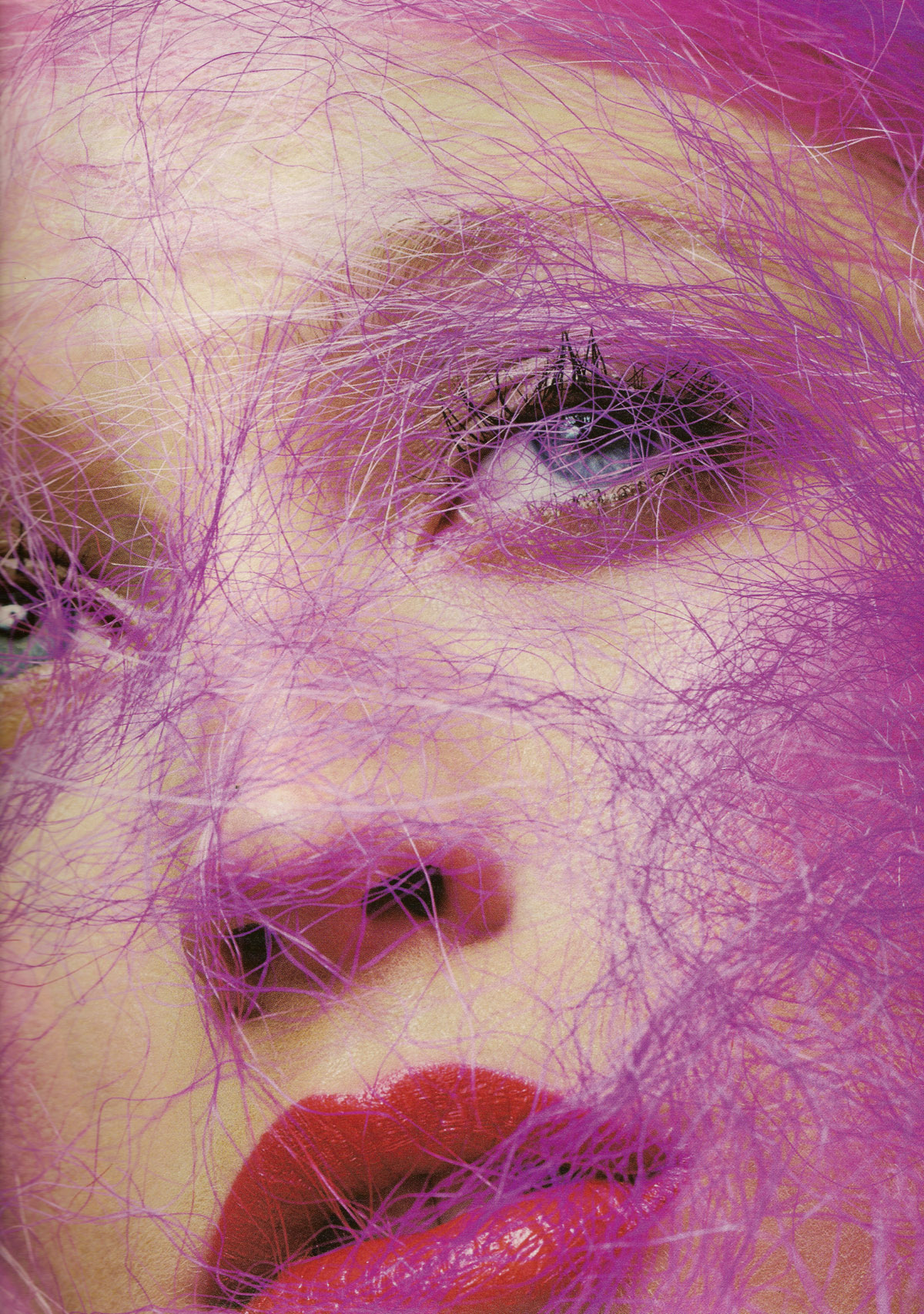
Raquel Zimmermann is such an amazing artist and an even more stellar human being. It’s hard to think of a more talented model today, especially with an impact spanning more than two decades now. From her personality, creativity, talent, and benign spirit, it’s no wonder Raquel is the force that she is. Fashion is so lucky to have her and she truly makes the world a brighter place. Happy Birthday Raquel Zimmermann. Wishing love and happiness, always.
Always upon you, light never ceases Lost from yourself, light never ceases Thousands of eyes, gaze never ceases Light is upon you ’til life in you ceases – Isis, Backlit
In Perfect˙ Issue Four, The Perfect Magazine team focus on the idea of autonomy and its relation to the power of self, personal choice, and independence. One of the individuals chosen for Perfect’ Issue Four to illustrate autonomy is none other than Brazilian top model, artist, and transcendental mediator, Raquel Zimmermann wearing ALAÏA, DSQUARED2, and Luar.
Of all the great artists, poets, musicians, athletes, and personalities that I’ve watched or read about who profoundly impacted the 21st Century, Linda Evangelista without a doubt ranks among the brightest of cultural icons of our time. She’s what Sugar Ray Robinson is to boxing, what Audrey Hepburn is to cinema, what Emily Dickinson is to poetry, what Michael Jordan is to basketball, and so many greats I can endlessly list on. There are so many fan pages on social media dedicated to 90s music, film and fashion and though I was someone born in the early 1990s, I was far too young to appreciate or understand any of it at the time.
But out of all the incredible music acts, iconic fashion moments, and cult classic films of the decade, there’s one model who completely changed the way I viewed fashion and art. By sheer passion, love, and creative force, she was able to completely redefine not only what a model could be, but also what fashion could mean to people. What Linda Evangelista was able to do on the catwalk, campaigns, and especially in fashion editorials was nothing short of miraculous. It’s like if you could capture the brilliance of Scorsese film-making or the beautiful way Jimi Hendrix played the guitar into one or a series of photos, and even then that wouldn’t adequately describe the wonder of Linda Evangelista.
But more than anything else, underneath all of the fame and notoriety, Linda Evangelista’s character and spirit are what I admire most. The person I discovered from her own words in magazine and video interviews was so humble, open, critical of herself, kind, and hardworking. Her passion and love infected everyone around her, elevating colleagues, designers, make-up artists, photographers, editors, journalists and the very fashion she loved so much itself.
She’s been through so much lately and I can’t imagine her pain. There’s so many people who love her and she’s touched so many lives. I hope/know things will get better and I hope Linda Evangelista’s birthday is wonderful and filled with love.
When I first met you I knew that my life would never be the same And I knew that you felt it too Never feel alone again, boy ‘Cause your love makes me feel so secure You got me singin
What do you do when you’re Not satisfied And when you’ve done all that you can You know you tried, oh yeah And how do you say that You need to get away Don’t make it so hard When I’m there for you
Versace 1992
Love has truly been good to me Not even one sad day Or minute have I had Since you’ve come my way I hope you know, I’d gladly go Anywhere you’d take me
It’s so amazing to be loved I’d follow you to the moon in the sky above
Got to tell you how you thrill me I’m happy as I can be You have come And it’s changed my whole world Bye-bye sadness, hello mellow What a wonderful day
It’s so amazing to be loved I’d follow you to the moon in the sky above
I’d go
And it’s so amazing, amazing (so amazing) I could stay forever, forever (stay for ever) Here in love and no, leave you never (no, leave you never) ‘Cause we’ve got amazing love (amazing love) Truly it’s amazing, amazing (so amazing) Love brought us together, together (we’re together) I will leave you never and never (leave you never) I guess, we’ve got amazing love (amazing love)
My love she throws me like a rubber ball Oh oh oh, the sweetest thing She won’t catch me or break my fall Oh oh oh, the sweetest thing Baby’s got blue skies up ahead But in this I’m a rain cloud You know she likes a dry kind of love Oh oh oh, the sweetest thing
I’m losing you I’m losing you Ain’t love the sweetest thing
I wanted to run but she made me crawl Oh oh oh, the sweetest thing Eternal fire, she turned me to straw Oh oh, the sweetest thing You know I got black eyes But they burn so brightly for her This is a blind kind of love Oh oh oh, the sweetest thing
The sun’s still shining in the big blue sky But it don’t mean nothing to me O-o-oh let the rain come down Let the wind blow through me I’m living in an empty room With all the windows smashed And I’ve got so little left to lose That it feels just like I’m walking on broken glass
And if you’re trying to cut me down You know that I might bleed ‘Cause if you’re trying to cut me down I know that you’ll succeed And if you want to hurt me There’s nothing left to fear ‘Cause if you want to hurt me You do it really well my dear
Walking on, walking on broken glass Walking on, walking on broken glass
You were the sweetest thing that I ever knew But I don’t care for sugar honey if I can’t have you Since you’ve abandoned me My whole life has crashed Won’t you pick the pieces up ‘Cause it feels just like I’m walking on broken glass
Photo by Steven Meisel
I’ll give you the sun, the rain, the moon, the stars and the mountains I’ll give you the world and all that you wish for And even more Girl I’ll love you more than you could know And that’s for sure I’d climb the highest hill, cross the widest sea Nothing could discourage me And I pray that you’ll be always there for me forevermore, oh
Ready or not I’ll give you everything and more All that I’ve got is yours I’ll give you everything All that you’re looking for
I’ll give you my heart, my soul, my time my love is a fountain I will be your earth Ooh and all that you need for and even more ‘Cause girl I love you more than words can show My love is pure I, I’ll walk a thousand miles, sail a thousand seas Nothing will discourage me And I pray that you will be always there for me forevermore
Since you been gone I been hangin’ around here lately With my mind messed up Jumped in my car tried to clear my mind Didn’t help me I guess I’m all messed up now baby Soon as I jumped into my ride Those memories start to play A song comes on the radio And there you are baby once again
It’s just another sad love song Rackin’ my brain like crazy Guess I’m all torn up Be it fast or slow It doesn’t let go Or shake me And it’s all because of you
Yeah, yeah, yeah Oh, lover boy to you I belong But maybe one day you’ll wake And you’ll find me gone But lover boy if you call me home I’ll come driving, I’ll come driving Fast as wheels can turn Oh, lover boy I know you too well And all of my lonely secrets To you I tell The highest of highs, the lowest of lows I’ll come driving, I’ll come driving Fast as wheels can turn Fast as wheels can turn
Take a bow, the night is over This masquerade is getting older Light are low, the curtains down There’s no one here (There’s no one here, there’s no one in the crowd)
Say your lines but do you feel them Do you mean what you say when there’s no one around (No one around) Watching you, watching me, One lonely star (One lonely star you don’t know who you are)
See the medal reverse This hope is not lost There’s mischief to turn Your ship to send off
Barbed wits and gowns They’ll ransack this town I’d rescue you now But in velvet you’ll drown And dance again
Oh Austere, lay by my side You’ve been left here but you’ll make no sound Hey, last word, don’t let me down You’re just another unfinished story now
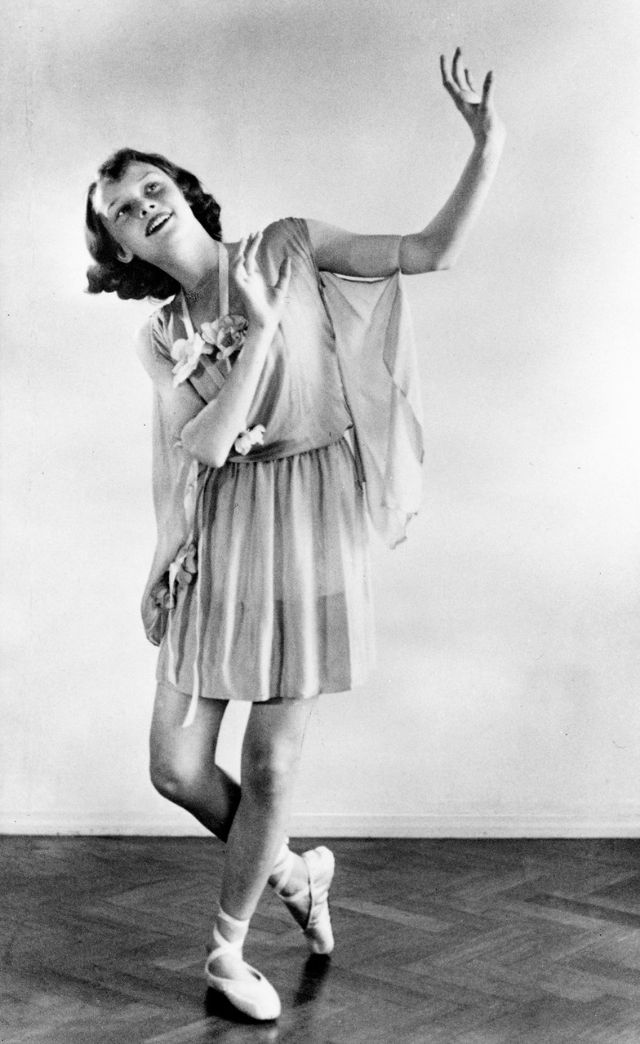
Bestowed with imitable grace, poise, and amiable charm, the screen legend and humanitarian, born Audrey Kathleen Rusten would not only survive the ravages of World War II, but go onto leave a lasting impact on film, fashion and forever live on in the hearts of countless around the globe. But before the awards, honors, and international acclaim, the modest aspiring ballerina could have never foreseen such a remarkable life before her that was so drastically different from her childhood.
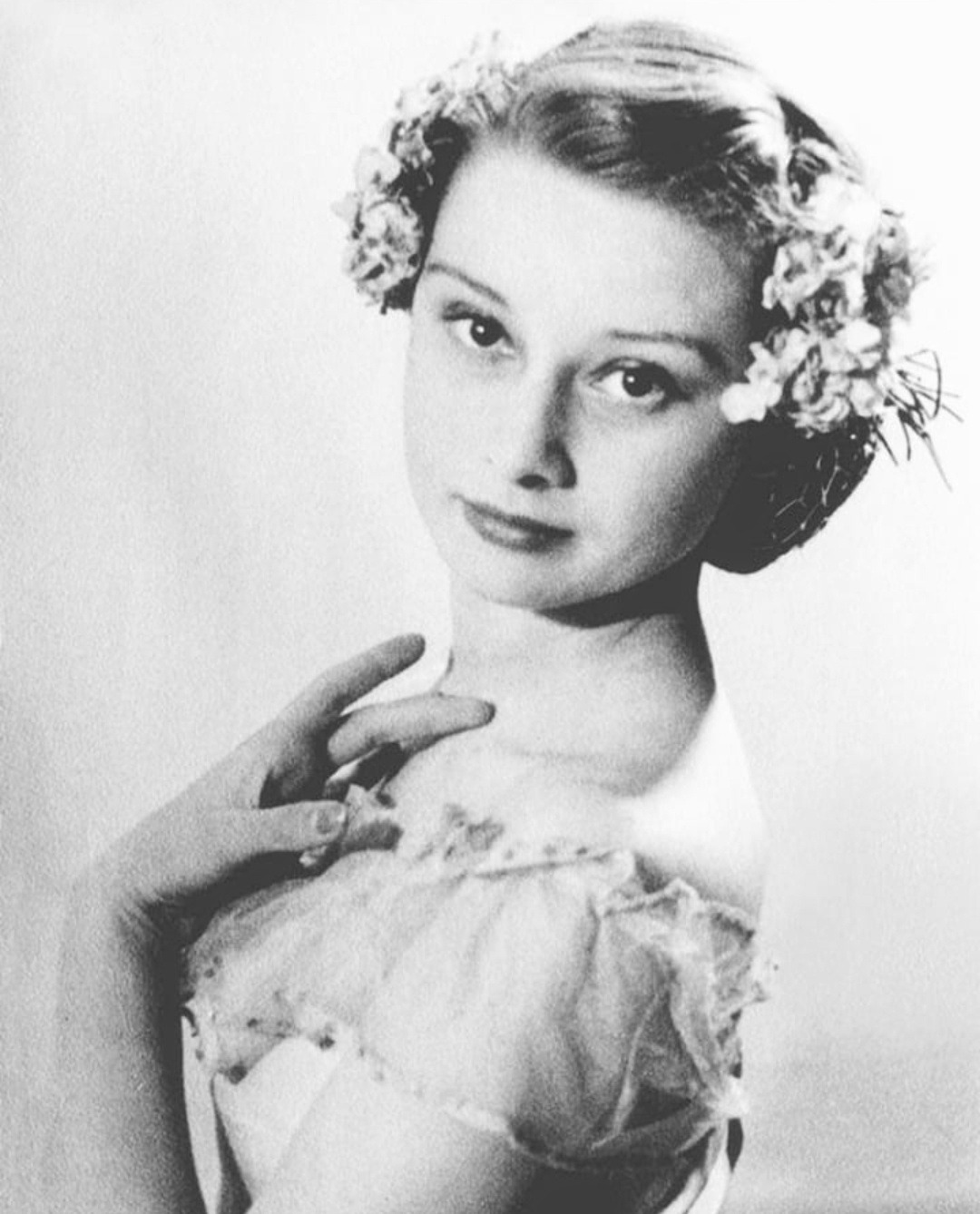
Born on May 4, 1929, in Brussels, Belgium, Audrey Kathleen Rusten, later changed to Audrey Hepburn was the daughter of Dutch Baroness Ella van Heemstra and banker Joseph Hepburn-Rushton. A shy and introverted tomboy, young Audrey Hepburn spent time with nannies and her beloved brothers. Yet as well off and aristocratic Audrey’s family were, her parents argued incessantly. Audrey’s father growing more enamored with National Socialism was a sign of things to come as her family life was already fractured.
Here on the stage, the time has come With the strains of “Be my Angel”, of rock in two four Time may keep alive that old swan song That we’ve been playing forever ‘Til the time may be right to say “goodbye” My voice is aching I’m tongue tired And the sounds we are making are so…
Audrey’s mother concerned with her being withdrawn, decided to send young Audrey to a boarding school which Audrey described as “shock therapy:” “From a very early age, she was always rather shy, and withdrawn, and introspective and it had gotten to the point where her mother was worried about her. So her mother sent her to a boarding school in England as ‘shock therapy’ and it evidently worked.”
Audrey excelled at school and even took interest in dance. But tensions continued to worsen and Audrey’s father soon divorced the baroness and completely abandoned the family, an abandonment that would forever leave Audrey feeling scarred and insecure:
“My father leaving us, left me insecure for life, perhaps. I do think there are things, experiences in childhood, form you for the rest of your life.”
As World War II broke-out in Europe in 1939, Audrey’s mother decided to relocate them to her native country, the Netherlands as the baroness believed the country would be safe because of its neutral status. But on May 10, 1940, the Netherlands was invaded by Nazi Germany. While under Nazi occupation, Audrey and her family had to endure nightmarish hardships, suffering terrible famine and starvation which historians refer to as “The Dutch Hunger Winter.” It was so severe that Audrey had to eat chewed up bulbs and cooked grass:
“There are so many images that will never go away. I saw these German tanks coming for hours, marching, driving. Holland fell after five days. There was a knock on the door and they took my uncle away who six months later was shot and another uncle, too, and my brothers went underground. But, a child is a child, is a child! You live by the day.”
Goodnight song, played so wrong Blame the crowd, they screamed so loud, so long
Throughout the occupation, Audrey would use her natural gift of goodwill and humanitarianism. Although her mother was initially a Nazi sympathizer, the baroness views quickly changed when Audrey’s uncle was imprisoned and killed. Audrey and her mother began to support the underground Dutch resistance where Audrey raised funds with her ballet performances and served as a courier to deliver messages for the anti-Nazi resistance.

On May 5, 1945, Just a day after her 16th birthday, the Nazi occupation had ended and the Netherlands were liberated. Within days UNRRA (United Nations Relief and Rehabilitation Administration) had brought emergency supplies and food to the Dutch. The humanitarianism by UNRRA would forever give Audrey a new lease on life and inspired her to provide the same to others so desperately in need.

“The day we were liberated was so exciting and that’s when life started again. As soon as I could, I wanted desperately to become a dancer and I got a scholarship in the Rambert Ballet School in London.”
After the war, Audrey and her mother relocated to London, England where Audrey continued to pursue her dream of becoming a ballerina. But at 19 years old, Audrey’s dreams could never be materialized as she was told she was too tall and too old to ever become a ballerina: “I was never going to be a great dancer. I was too tall. I didn’t have the training that I should’ve had when I was young because of the war and so forth.”
Dismayed but not deterred, Audrey Hepburn still committed herself to the stage, receiving a few modeling assignments from fashion photographers, taking acting classes, and in 1948, made her first stage debut as a chorus girl in the musical High Button Shoes in London, where a few more small parts followed. Two years later Audrey made her feature film debut in 1951’s One Wild Oat, the, Young Wives’ Tales and Lavender Hill Mob, starring Alec Guiness.
But Audrey Hepburn wouldn’t become a star until she was discovered by French writer Colette while working on Monte Carlo Baby. Colette was so awe struck by Audrey that she insisted Audrey star in the Broadway version of her novel Gigi. Audrey was hesitant and felt undeserving of such an opportunity. Yet in 1951 in the same year Audrey decided to board the Queen Mary to New York for her lead role in Gigi. Her performance was met with great success which led to Audrey Hepburn landing a lead role in William Wyler’s highly acclaimed romantic comedy Roman Holiday (1953).
From then on, Audrey Hepburn’s ascent into a premier Hollywood starlet and cultural phenomenon were undeniable, starring in universally praised and beloved films like Sabrina (1954), War and Peace (1956), Funny Face (1957), and the Nun’s Story (1959). In just five years, Audrey raked in Academy, BAFTA, and Golden Globe Awards. But her crowning achievement came in 1960 with her first husband Mel Ferrer, as she welcomed her first child, Sean Ferrer.
“She very much wanted to have children. She loved children. I think it may have been a way to heal her own youth, but I think she wanted that friendship which she got. We were great friends.” – Sean Ferrer
Audrey would return to the screen in one of her most defining roles ever as an flamboyant and fashionably chic call girl in Blake Edward’s breakout romantic comedy Breakfast at Tiffany’s (1961). Audrey now at the height of her career went on to star in cinematic hits like The Children’s Hour (1961), Charade (1963), Paris When It Sizzles (1964), My Fair Lady (1964), and How To Steal a Million (1966).
After nearly 16 years as a lead Hollywood actress, in 1967 Audrey Hepburn separated from her husband and semi-retired from acting, where she wouldn’t do another film until 1976. Although Audrey mostly starred in romantic comedies, from Roman Holiday (1953) to How to Steal a Million (1966), each successive Hepburn performance was nothing short of sensational and completely outdid the last.
Despite not having any formal training as an actress, Audrey was a natural and possessed great depth such as her work in Fred Zinnermann’s The Nun’s Story (1959), William Wyler’s The Children’s Hour (1961), Stanley Donen’s Two for the Road (1967), and Terence Young’s psychological thriller Wait Until Dark (1967). Almost every poll or list of note of greatest Hollywood actresses of all time like AFI’s (American Film Institute) 100 Years… 100 Stars, Audrey is always ranked in the top 5 or 10, and several of her films are deemed culturally significant, given universal high marks by critics and fans alike.
“I think what those clothes signified for her were more than just the fashion. They were sort of an armor of love if you can call it that, of something that enabled her to be appropriately dressed which she believed in.”
Whether on or off the camera, from the big screen to fashion shoots, Audrey without a doubt was the fashion icon of the 20th Century and even today, you can see her look and style emulated throughout the cultural landscape. Owing to her learned poise, steaming from years performing ballet, Audrey maximized her innate elegance and simplicity to achieve a look that was so unlike anyone else’s of the time. To Simple tops, beat-necks, ballet flats, headscarfs, to her iconic little black dress, Audrey’s looks were so timeless and exquisite.
Yet Audrey’s iconic look wasn’t something completely contrived on its own as Hubert de Givenchy designed many iconic dresses for the actress like the white lace gown worn at the Academy Awards in 1954 or her unforgettable black cocktail dress worn in Breakfast at Tiffany’s. Although initially Givenchy wasn’t impressed by Audrey when they first met, the two hit it off swimmingly shortly after, where an inseparable lifelong friendship was cherished between them:
“She’d tell me something. I always remember and very touching. She said, ‘You know, when I’d wear a white blouse or a little suit you create for me, I have the feeling to be protect [sic] by your suit or by your blouse, and this protection is very important to me.’” Hubert de Givenchy
Although Audrey Hepburn was so revered by the public and thought to be one of the most beautiful women in the world at the time, she couldn’t understand their adulation and never saw herself as beautiful:
“She didn’t think she was particularly beautiful or striking. She did feel she was awkward and too thin and maybe not as appealing as other movie stars. And so she always looked at the fact that she was so famous as kind of a freak accident of nature.”
Audrey Hepburn’s final film, Always (1989), was a romantic fantasy drama directed by Steven Spielberg and starred Richard Dreyfuss. Finally departing from acting, Audrey who always held a deep sense of appreciation and gratitude to UNRRA for assisting her and many victims of War World II with food and medical supplies, jumped at the opportunity to become a UNICEF Goodwill Ambassador. Audrey’s first field mission was in Ethiopia. While there, Audrey witnessed unfathomable horrors of civil strife and dreadful famine. Although Audrey disliked being a celebrity and being in the spotlight, she nonetheless felt compelled to use her fame to raise awareness to the plight of children suffering from extreme poverty and famine.
“My mother always impressed upon us. You have to be useful, to be needed and to be able to give love. I think that’s even more important than receiving it.”
According to Luca Dotti, Audrey Hepburn’s son, in the recent book Warrior: Audrey Hepburn authored by Robert Matzen, at the age of 60 years old, Audrey braved bombs and bullets in the most dangerous war zones like Somalia in the world to give aid and shine a light on nightmarish conditions children had to survive in underdeveloped countries. “‘I love this woman,’” says Matzen. “Warrior is the story of a genuine hero who signed on to UNICEF and then drove herself mercilessly for the cause.”
After nearly four years of tireless humanitarian work for UNICEF, Audrey Hepburn was diagnosed with colon cancer. Given just months to live, she returned to her home in Switzerland to be with her sons Sean and Luca, and long time partner, Robert Wolders. On January 20, 1993, Hepburn passed away in her sleep.
Get some honesty Take the best of me and then the rest let go In every situation with it’s tireless rage Step outside the cage And let the real fool show I should have stayed ’round to break the ice I thought about it once or twice But nothing ever changes Unless there’s some pain
It’s quite remarkable the loving legacy and rich cinematic wonders Audrey Hepburn left for the world. Despite all of the tragedies and darkness that followed Audrey Hepburn throughout her life, with the goodwill teachings of her mother and Audrey’s innate brilliant humanity, she possessed an uncanny altruism which she showered onto the world. And whatever pain or sadness she might’ve found herself in, she could always feel renewed comforting and loving others, and in a beautiful life cycle, the world felt convalesced in her love:
“She was a living embodiment of the best in the human heart, the human mind, and soul. And I think people drew sustenance from that.” – Harry Belafonte
In her modesty and selflessness, Audrey Hepburn couldn’t help but feel all the awards, heaps of praise, love, and global notoriety were unmerited. She never saw herself as beautiful, that talented or fathom how she could be a star at all: “She was happiest not wearing makeup and at home with the dogs and the flowers and giggling away or going to the movies, and not being a movie star at all.” – Doris Brynner
Goodnight song, played so wrong Blame the crowd, they screamed so loud, so long
Audrey Hepburn was just as insecure, as unsure of herself as the rest of us. But she beautifully braved the human condition. She showed us an inner beauty that is unselfishly in the service of others, a goodwill that can transform the world for the better, an outward manifestation of love that can mend our inner sadness and pain if we let it. She was the embodiment of love and on the stage of life, she shined like nobody else.
“She’s the girl from across the landing who puts on a little black dress and she’s a wonderful package of imperfections and yeah, she pulls it off and she goes out there and makes it happen. “And we root for her and we feel a certain ownership, we feel her as one of us, that is really the best way I can describe it. And it’s extraordinary.”
I’m so happy for Linda Evangelista. Her impact on fashion, art, and pop culture are immeasurable. I loved reading her interviews in fashion magazines and the person that I found was so humble, caring, hard working, selfless, and couldn’t help but uplift everyone else around her. She’s such a creative magnet and her work and passion truly brings out the best in people. Thanks for sharing your story. I’m sure there will be a resolution to all this one day. Wishing You Happiness & Infinite Love ♡
Canadian supermodel Linda Evangelista opens up about the fat-freezing nightmare that left her "permanently deformed" https://t.co/JFVlXBbJFv
Go behind the scenes of this week's cover story on the PEOPLE Every Day podcast, where we're breaking down everything supermodel Linda Evangelista had to say about her life changing cosmetic procedure. https://t.co/eIACoME5GWpic.twitter.com/45zy6QrNSC
You must be logged in to post a comment.