
Photography by Mikael Jansson.


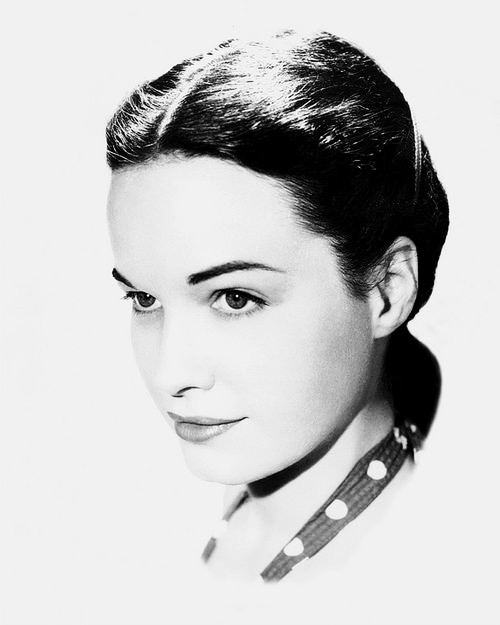
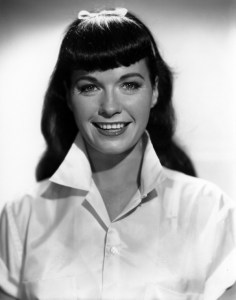 Born April 22, 1923, in Nashville, Tennessee, it was a hard knock life for Betty May Page, the second child of Roy and Edna Page’s six children. Struggling against the backdrop of the Great Depression in the late 20s, Roy moved his family throughout the south for stable work, yet nothing paid off.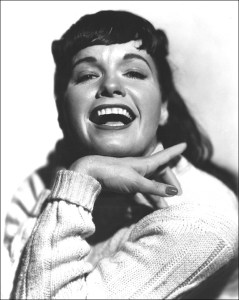
Edna was forced into the role of provider and Bettie at the age of 8, filled the void and looked after her other siblings. Due to the lack of financial support from Roy and his marital infidelity, Edna filed for a divorce when Bettie was 10, and her and her two sisters were placed in orphanage.
Bettie and her sisters took to performing arts as children to distract from the reality of being orphans. They pretended to be Hollywood actresses and mimicked the beautiful models shown in photos.
Bettie knew an education would be her way out of poverty and made her mind up to become a teacher, enrolling in high school in 1937. As a student, she was a member and program director of the Dramatics Club, secretary treasurer of the Student Council, coeditor of the school’s newspaper and yearbook; she was even voted “Most Likely to Succeed.”
Stars live in the evening
But the very young need the sun, uh-huh
Pretty baby, you look so heavenly
A neo-nebular from under the sun
I was forming, some say I had my chance
The boys were falling like an avalancheYa ya baby
La Dolce Vita is a magic dance
No-one was listening
Pretty baby, un petite ingenue
A teenage starlet, I fell in love with you
Bettie was crushed to have barely missed being named valedictorian by .25%, and lost the opportunity for a 4 year scholarship at Vanderbilt University. But Bettie was named Salutatorian of her class, winning a $100 scholarship to Peabody College.
After high school, Bettie earned a teaching credential. But her career in the classroom was short-lived. “I couldn’t control my students, especially the boys,” she said. Bettie’s boyfriend of two years, Billy Neal was drafted after the Pearl Harbor attacks, and against her better judgement, Bettie said yes when he proposed to her.
After earning her Bachelor of Arts degree from Peabody College, Bettie moved to San Francisco to be with Billy. It was in San Francisco that Bettie got her first modeling job at a local furrier where Bettie modeled fur coats for clients.

By 1948 she had divorced Billy as he had become violent and jealous after returning from the war. Bettie moved to New York City where she enrolled in acting classes while working as a secretary.
In 1950, during a walk along the Coney Island shore, Bettie met Jerry Tibbs, a police officer with an interest in photography. Tibbs took pictures of Bettie and put together her first pinup portfolio. Bettie and Tibbs became good friends and it was Tibbs who suggested Bettie wear bangs because of her high forehead. Bettie continued to sport the bangs even decades later.
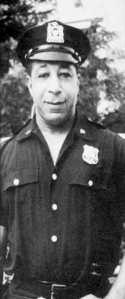 “She was a white woman from a small southern town and he was a black man from New York City, and I think that speaks volumes about Bettie and how she was willing to break with the social mores of her time to do what she felt was natural, good, and right.”
Tibbs introduced Bettie to numerous other photographers including Cass Carr who organized outdoor photographic sessions, which Bettie intensely enjoyed. In a matter of months, Bettie’s modeling career had taken off. Camera clubs led to posing for various magazines such as Wink, Eyeful, Titter, and Beauty Parade.
While gracing countless men’s magazines and becoming a pinup queen, Bettie began to work with Irving and Paula Klaw in 1951 at Movie Star News, a successful photography and pinup art studio at the time.

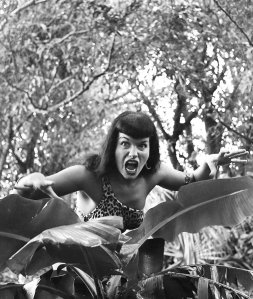 While working for the Klaws, Bettie perfected her modeling and posing even more, incorporating a more Gothic, BDSM aesthetic in her shoots leading her to be dubbed the “Queen of Bondage. Bettie
 would dawn lingerie, fishnets, boots, use whips and wear custom fetish outfits while acting out a bondage or spanking scene. Her work with the Klaws would go onto influence fashion designers and models for decades to come.
In 1953, Bettie auditioned for an apprenticeship at Sea Cliff Summer Theater in Long Island where she studied acting under the tutelage of Herbert Berghoff. With Berghoff’s encouragement, Bettie secured several roles in various New York productions as well as various television appearances. Her off-Broadway productions included Time is a Thief and Sunday Costs Five Pesos. Bettie even appeared on the Jackie Gleason show.
Her most professional photographs were taken in 1955 by fashion photographer Bunny Yeager. They included shots of Bettie nude posing with cheetahs, frolicking in waves and deep-sea fishing, and a January 1955 Playboy centerfold of her winking under a Santa Claus cap.

In the late 50s, Bettie became a target of Estes Kefauver, a U.S. senator from Tennessee who led the charge on hearings that targeted indecent and pornographic publications. Bettie was subpoenaed to testify before a court because of her work with the Klaws which wasn’t pornographic.
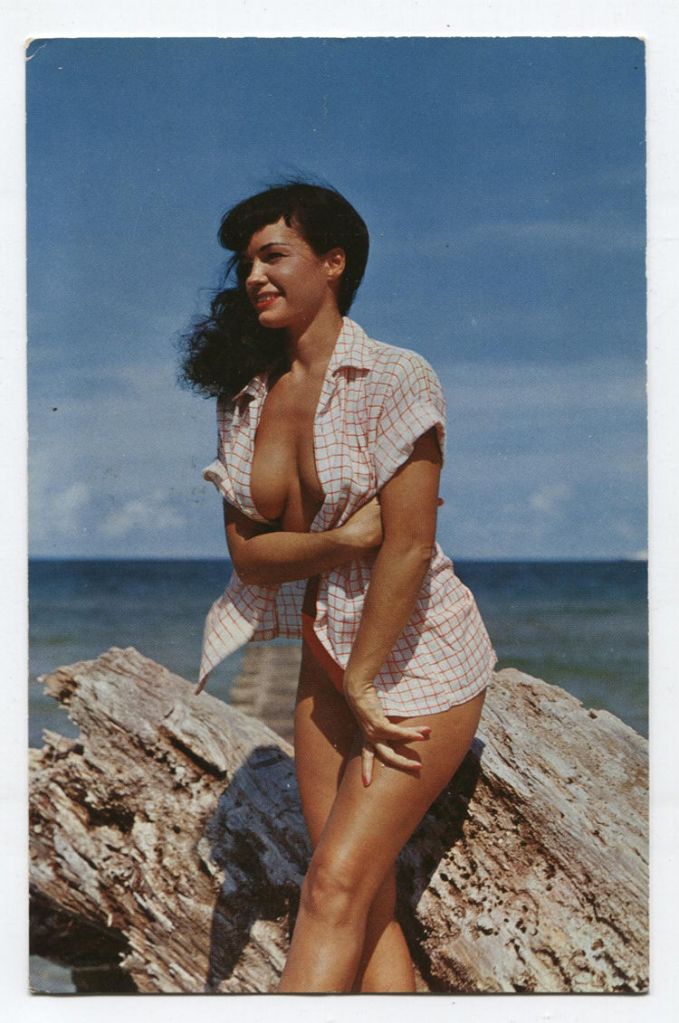 After many years of being a target of Kefauver, harassment and intimidation from the FBI, failed relationships, and feeling her life going “adrift,” Bettie walked away from it all at the age of 35. She quit modeling and moved to Florida, where she married again to a younger man.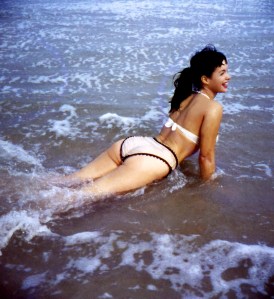
After an argument on New Year’s Eve in 1959, Bettie went walking and noticed a white neon sign over a little white church with its door open. After quietly taking a seat in the back, she had a born-again experience. Page immersed herself in Bible studies and served as a counselor for the Billy Graham Crusade.
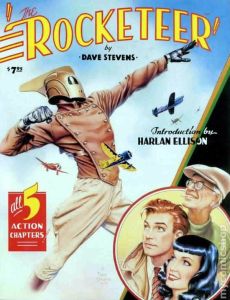
Decades after Bettie disappeared from public life, she had unknowingly become a pop culture icon during the great Bettie Page revival from the 1980s to 1990s. Painters, comic book artists, fashion designers, supermodels, pop stars all drew inspiration from Bettie Page. You could see her likeness from Madonna, comic books like Dave Steven’s “The Rocketeer,” fashion catwalks and art galleries.
Don’t be cruel
Be a thing-sweet thing as a rule
Don’t be sad
I left you in the street, you’re pre-fab
I had to get awayDon’t go away sad
Don’t go pre-fab
Don’t go be bad
Don’t go away mad
Just go away (go away)

Although Bettie Page influenced countless with her beauty and magnetic personality, it was those same indelible qualities that attracted sadness and misfortune to Bettie’s life like a lightening rod. Bettie grew up with a mother who was emotionally detached, and a father she describes as a womanizer and sex fiend that would molest Bettie and her sisters.
I’m in the phone booth, it’s the one across the hall
If you don’t answer, I’ll just ring it off the wall
I know he’s there, but I just had to call

Bettie had no problem attracting men as she was married three times, had lovers and admirers, but all of her relationships seemed ill-fated or destined for failure from the start. From a jealous and abusive husband, to having to suffer crazy ex-wives, Bettie just seemed to be unlucky in the love department.
Don’t leave me hanging on the telephone
Don’t leave me hanging on the telephone
Despite Bettie being very strong willed, even in the face of being a victim of molestation from her father and being raped by a group of sailors in the ’50s, her past and hectic lifestyle finally took it’s toll in 1979 when she was arrested after an altercation with her landlady. Doctors diagnosed her with acute schizophrenia, and she spent 20 months in a state mental hospital in San Bernardino, and subsequently placed under state supervision for eight years.
In spite of Bettie’s personal demons she wasn’t one to be ever unkind, bitter or arrogant. All the photographers, artists, writers and personal friends like Dave Stevens who had the chance to meet or professionally work with her, all loved Bettie and spoke highly of her.
I heard your mother, now she’s going out the door
Did she go to work or just go to the store?
All those things she said, I told you to ignore
Oh, why can’t we talk again?
Oh, why can’t we talk again?
Oh, why can’t we talk again?
 No matter what hardship Bettie faced in life, she took it in stride and always rebounded. A bit of darkness might of hung over Bettie’s life, but the love, beauty, and kindness she exuded, reciprocated to her in kind. And until her dying day, countless people like Dave Stevens, who passed shortly after Page, jumped at the opportunity to help Bettie in her time of need.
“I’ll always paint Bettie Page,” De Berardinis said after Bettie’s death. “But truth be told, it took me years to understand what I was looking at in the old photographs of her. Now I get it. There was a passion play unfolding in her mind. What some see as a bad-girl image was in fact a certain sensual freedom and play-acting – it was part of the fun of being a woman.”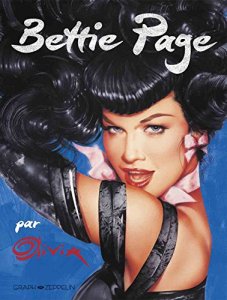
Bettie was a playmate for January 1955, won Miss Pinup Girl of the World, dubbed the Queen of Curves, Queen of Bondage, and the Dark Angel! A poor girl from Tennessee without much prospects in life became a defacto pioneer for the sexual revolution, progressive thought, art, fashion, and challenged our ideas about femininity and nudity.
Most importantly, Bettie was her own woman who in a bigoted and sexist society, broke all the rules, defining and expressing herself, and wasn’t afraid to love. It’s almost funny how Bettie “parallels” with Blondie’s breakout album Parallel Lines and Debbie Harry’s story. Both women were unwanted by their parents, nearly counted out by everyone, and faced hardships because of their beauty. But both ultimately ended up changing the world and the perception of women.
It’s good to hear your voice, you know it’s been so long
If I don’t get your calls, then everything goes wrong
I want to tell you something you’ve known all along
It’s pretty funny how society today has this mass disdain for beauty and does everything it can to tarnish it. But the Betties and Debbies are screaming over the telephone somewhere trying to make us see reason again to almost no avail, trying to tell us something we’ve known all along.
Don’t leave me hanging on the telephone
Bettie was the greatest, her influence can still be felt today, and she won’t be forgotten anytime soon.


Much like Richard Donner’s Superman (1978) no other film has broken more ground for the superhero genre and film noir quite like Batman Returns. 25 years ago Tim Burton, screenwriter Daniel Waters and Danny Elfman delivered a one of a kind gothic noir masquerading as a superhero movie to the world of cinema. Although the film performed well at the box office and was given mostly high praises from critics, audiences and comic book fans alike were dissatisfied with the film because of its misunderstood direction and the grotesque nature of the Penguin. Even companies like McDonald’s along with parents panned Batman Returns for its dark tone and sexual humor.
Despite some of the misunderstandings and complaints about the film, Batman Returns remains not only my favorite superhero film, but one of my favorite films of all time. There’s many wonderful things I could say about the performances from Michael Keaton, Danny DeVito, And Christopher Walken, but those performances are completely dwarfed by Michelle Pfeiffer’s iconic role as the larger than life, unrestrained, latex adorned Catwoman.


Selina Kyle (Catwoman) first appears on screen as a timid secretary pouring coffee in Max Shreck’s boardroom as Max pitches his plans for a new power plant to the mayor and partners. As the meeting wraps up Selina attempts to make a suggestion to Shreck’s proposal to the group of men, but decides against it when she gets their attention. Shreck makes a condescending remark about her not being housebroken yet.
Selina is seen later returning to her apartment. While walking through the door, Selina says the now famous lines, “Honey, I’m home! Oh, I forgot. I’m not married.” She then listens to her phone messages after feeding her cat and is reminded she has to return to the office. While at the office, Selina pries into the protected files of Max Shreck regarding the true intentions of his power plant plans. Selina tells Shreck what she knows as he comes into the office. Shreck then violently pushes Selina out of a window several stories above ground where she falls to her death.

Selina soon after is miraculously reanimated by stray cats in the snow. Selina returns to her apartment in shock and after listening to her phone messages goes into a violent rage while defacing her apartment. Selina begins to fashion her latex catsuit. With her new appearance and persona while being fueled to take the life of Max Shreck, Catwoman is born!
Selina as Catwoman is truly magnificent as she prowls the night streets of Gotham City strutting in her latex glamour with her whip and claws. Catwoman is completely fearless, tenacious, secure and confident with who she is. Before becoming Catwoman thanks to the accident, Selina was the polar opposite of her new self. She had very little self worth, referred to her self as pathetic to her cat, and even before Max Shreck pushed her out the window asked him, “How can you be so mean to someone so meaningless?”

But the new Selina can take on the world, could care less what people think of her and doesn’t need saving. Before Selina fretted over her love life and jokingly commented on the sexcapades of her cat while Selina’s significant other couldn’t be bothered to go with her on a Christmas getaway because he “needs to be his own person, not an appendage. But the Selina now is sensual, complex, assertive, has no problem garnering attention or attracting billionaire playboys like Bruce Wayne who in actuality aren’t that different from one another even in their alter ego’s.

Believe it or not, Michelle Pfeiffer wasn’t initially cast to be Catwoman in Batman Returns. Annette Bening was supposed to play the role before she got pregnant. Michelle was so excited that she might get another opportunity to play Catwoman, a character she was obsessed with since she was a girl that she pitched the Idea to Tim Burton just as he was halfway done with the script.

I think myself and countless others are fortunate that it was in the cards for Michelle Pfeiffer to play Catwomen. Michelle was so brilliant and unique as Catwoman that no other actress since has even come close to matching her performance, let alone outdo the sex appeal of her catsuit decades ago.

All in all, I couldn’t think of a more deserving actress to bring such an iconic character to life on the big screen and I’m sure Batman Returns wouldn’t have been as big of a hit without Michelle’s Catwoman. Heck, she even got a teacher to help her master using the whip and kickboxing. Michelle’s Catwoman wasn’t just the sexiest, most athletic, most iconic, and most memorable, above everything else her Catwoman is still cherished the most among fans.

Here’s to a wonderful Gothic Christmas with plenty of latex and stitching to brave the most dangerous winters in Gotham.
“Mistletoe can be deadly if you eat it. But a kiss… can be even deadlier if you mean it.”
______________________________________________________


 Super Love Unknown
You must be logged in to post a comment.